
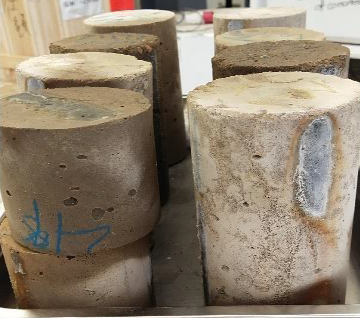
Researchers at Australian educational institution Flinders University are working to turn mining waste into a powerful tool for sustainable construction.
Dr. Aliakbar Gholampour, a senior lecturer in Civil and Structural Engineering at the school’s College of Science and Engineering, said his team has uncovered promising applications for a rare earth by-product in concrete production, a major building block that could help to reshape the future of construction materials.
“The study focuses on delithiated β-spodumene (DβS), a by-product of lithium refining, which exhibits pozzolanic properties – meaning it reacts chemically to enhance the strength and durability of concrete,” he said. “The research shows that when used in geopolymer binders, DβS can significantly improve mechanical performance and long-term resilience.”
By examining the microstructural behavior of DβS-based geopolymers under varying alkaline activator ratios, he said the group has gained critical insights into its suitability as a sustainable concrete ingredient.
Conventional concrete is the world’s most manufactured item and most widely used construction material, with 25 billion tonnes used every year – but it consumes about 30% of non-renewable natural resources, emitting about 8% of atmospheric greenhouse gases and comprising up to 50% of landfill.
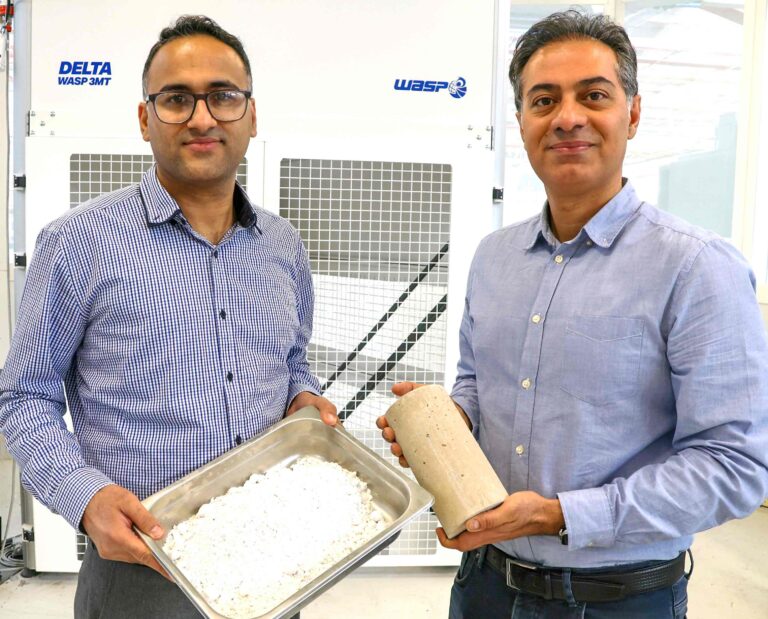
The benefits are significant, not to mention that it creates an alternative to conventional concrete that is environmentally friendly. What’s more is that neither strength nor durability is undercut with this method, and waste and emissions – along with natural resource consumption – are mitigated.
Gholampour noted that his research team has found that their studies provide insight that points to the incorporation of DβS as an alternative ingredient to fly ash in the creation of geopolymer binders and outlines an optimal alkaline ratio range for use in geopolymers.
“This approach not only enhances mechanical properties and durability of geopolymer concrete, but also addresses a growing environmental concern by diverting DβS from landfill,” Gholampour said.
“With lithium refining responsible for generating increased volumes of DβS, the capability to reuse this in construction offers a sustainable solution that will reduce industrial waste, prevent potential soil and groundwater contamination, and support circular economic practices in the mining and building sectors.”

The findings for the DβS study can be found in Materials and Structures journal, Vol. 58 (DOI: 10.1617/s11527-025-02789-5) and in the Journal of Materials in Civil Engineering, Vol. 38, Issue 1 (DOI: 10.1061/JMCEE7.MTENG-21163).
For more on the work done since, follow-up reports are available to view in the International Journal of Construction Management (DOI: 10.1080/15623599.2025.2595498 and DOI: 10.1080/15623599.2025.2595500).
The DβS study received financial assistance from Cooperative Research Centres Projects Grant. The research team also received delithiated beta spodumene material from Backtech.